How to Choose a Border Collie Puppy: What to Look For
Genetic health tests, hip and elbow scores, and socialisation: what a Border Collie breeder should show you before you pick a puppy from the litter.
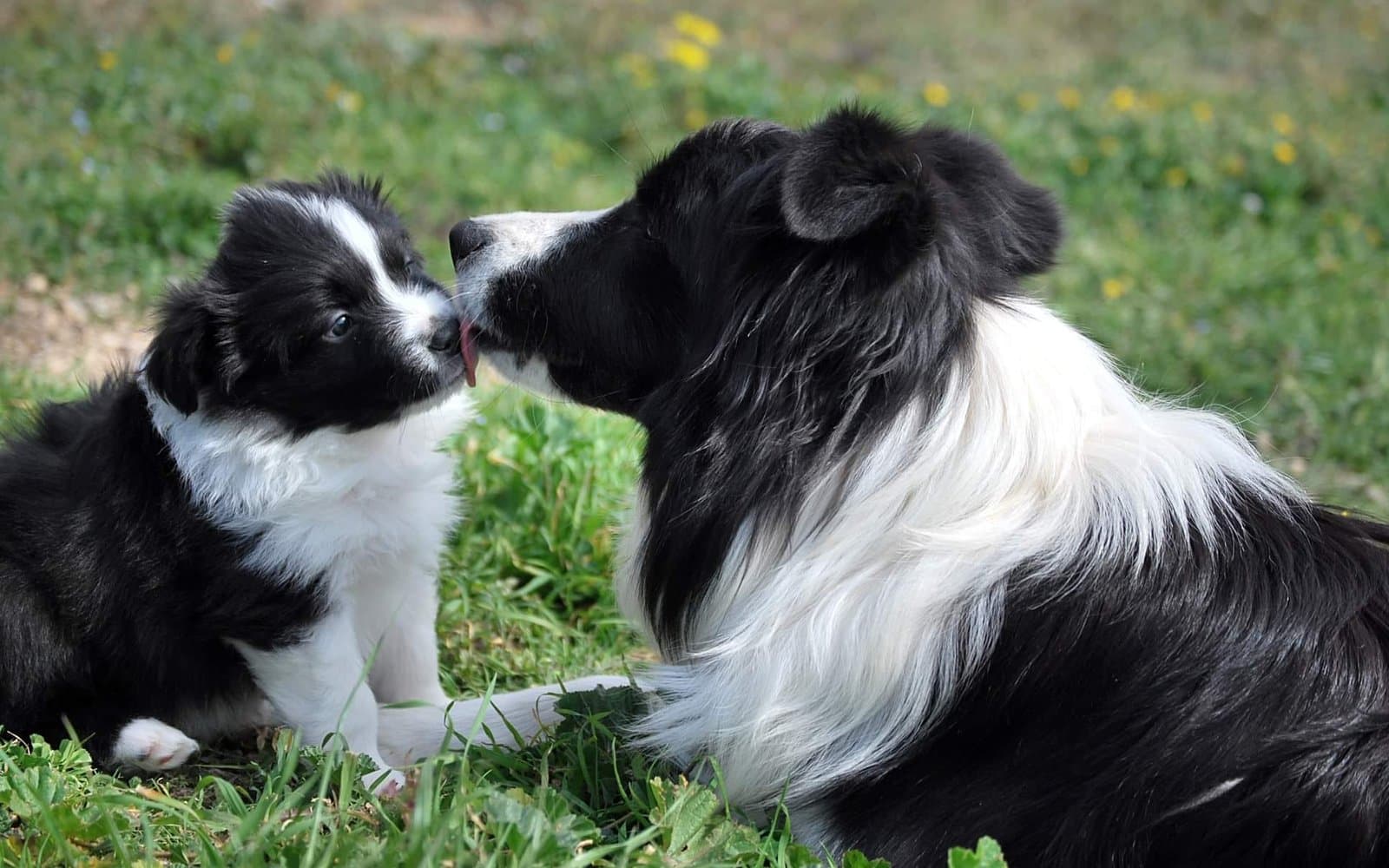
Almost every conversation with a prospective owner opens with coat colour or the puppy's sex. Those are the two things that matter least. A Border Collie lives thirteen or fourteen years, and what shapes those years comes down to two things decided before the puppy is born or during its first eight weeks: the health of the parents, and what the puppy experienced at the breeder's home.
This is what we put on the table when someone asks, and what we think you should ask of any breeder.
Genetic tests: what they are and what they don't prove
The Border Collie carries a handful of well-identified hereditary conditions. They are detected with a DNA test — a cheek swab or a blood sample — and each dog comes back as one of three results: clear, carrier, or affected.
The panel routinely run in the breed:
- CEA (Collie Eye Anomaly)
- TNS (Trapped Neutrophil Syndrome)
- CL (Neuronal Ceroid Lipofuscinosis)
- MDR1 (sensitivity to certain drugs)
- IGS (Imerslund-Gräsbeck Syndrome)
- SN (Sensory Neuropathy)
- DM (Degenerative Myelopathy)
- MH (Malignant Hyperthermia)
- GG (Goniodysgenesis / closed-angle glaucoma)
- EAOD (Early Adult Onset Deafness)

Here is the point most often misunderstood: a carrier parent is not a problem. These conditions are recessive. A carrier never develops the disease, and bred to a clear dog, no puppy in the litter will be affected — some will be carriers, and that is all. What must never happen is carrier bred to carrier for the same condition.
We apply it like this: Fleur is a carrier for CEA and TNS, and Giotto is a carrier for CEA. Both are in the breeding programme without reservation, simply because they are not bred to another carrier of the same condition. Discarding an excellent dog for being a carrier narrows the gene pool and buys nothing in return.
What you should insist on is seeing the results. Not "the parents are tested", but the laboratory report with the dog's name on it. If a breeder is uncomfortable showing them, that is all the information you need.
And what a genetic panel does not tell you: nothing about temperament, nothing about joints, and nothing about the conditions in the breed that still have no test. It does not buy total peace of mind. It removes one specific, known risk.
Hips and elbows: this doesn't show up in DNA
Hip and elbow dysplasia is polygenic and also environmental — growth rate, weight, exercise in the first months all play a part. No DNA test predicts it. It is assessed with official radiographs, read by a recognised scoring panel, and only from twelve months of age.
Under the FCI system, which is the one used in Spain:
- Hips: graded A to E. A is clear, B is near-clear. C onwards is dysplasia in increasing degrees.
- Elbows: graded 0 to 3. 0 is clear.
The dogs in our programme are A/0, with the exception of Happy, who is B/0. You is still too young and her radiographs are pending: that is what you say when it is the truth, rather than assuming a result.
Two honest caveats. First: A/0 parents do not guarantee an A/0 puppy. They lower the odds, which is a different and less absolute claim. Second: a good part of the final outcome is in your hands, not the breeder's. An overweight puppy, daily stairs, or jumping and hard stops before the growth plates close can end up with worse hips than its genetics called for.
Add eyes to the list: an ophthalmological examination by a specialist is a different thing from the CEA genetic test, and picks up what DNA does not cover.
Socialisation: the eight weeks you can't get back
Between three and twelve weeks the puppy goes through the window in which the brain decides what counts as normal in the world. Whatever it meets in that period gets filed as part of the landscape. Whatever it doesn't will have to be learned later, with more effort — and sometimes never completely.
In a Border Collie this counts double. It is a sensitive breed, attentive to detail, with an enormous capacity to process its surroundings. Raised well, that sensitivity is what makes a dog that reads its person. Handled badly, it turns into reactivity to noise, movement, or strangers.

What to ask, and what a good answer contains:
- Where are the puppies raised? Inside the house, not in an isolated kennel. They need the vacuum cleaner, the doorbell, the television, kitchen noise, and visitors.
- What surfaces have they walked on? Tile, grass, gravel, wood, unstable surfaces. Confidence in their own body is built there.
- Who have they met? Different adults, children of various ages, balanced adult dogs who will correct their excesses.
- Have they left the property? A short car trip, a vet visit that isn't only a vaccination, time spent away from home.
- How were weaning and separation from the dam handled? Never before eight weeks. The mother and littermates teach bite inhibition and self-control; nobody else does it as well.
And one question that tells you a great deal about the breeder: what have you seen in each puppy? Someone who has lived with the litter for eight weeks knows which one recovers fastest from a fright, which one persists with a toy, and which one gives up. That observation is worth more than any twenty-minute temperament test. It is also why in our litters we prefer to match a puppy to the home it is going to, rather than letting people choose from a photo.
You don't pick a puppy, you match one
If we had to reduce it: ask for paperwork, understand what it says, then look at where those puppies grew up. A breeder who shows you official radiographs, laboratory reports with a name on them, and tells you plainly what is pending and what is not, is giving you exactly what you need to decide.
The rest — colour, sex, the marking on the face — gets decided afterwards, and changes nothing that matters.
If you are considering a Border Collie and want to see our dogs' health results, they are published on each profile, and we are happy to answer questions through contact.